
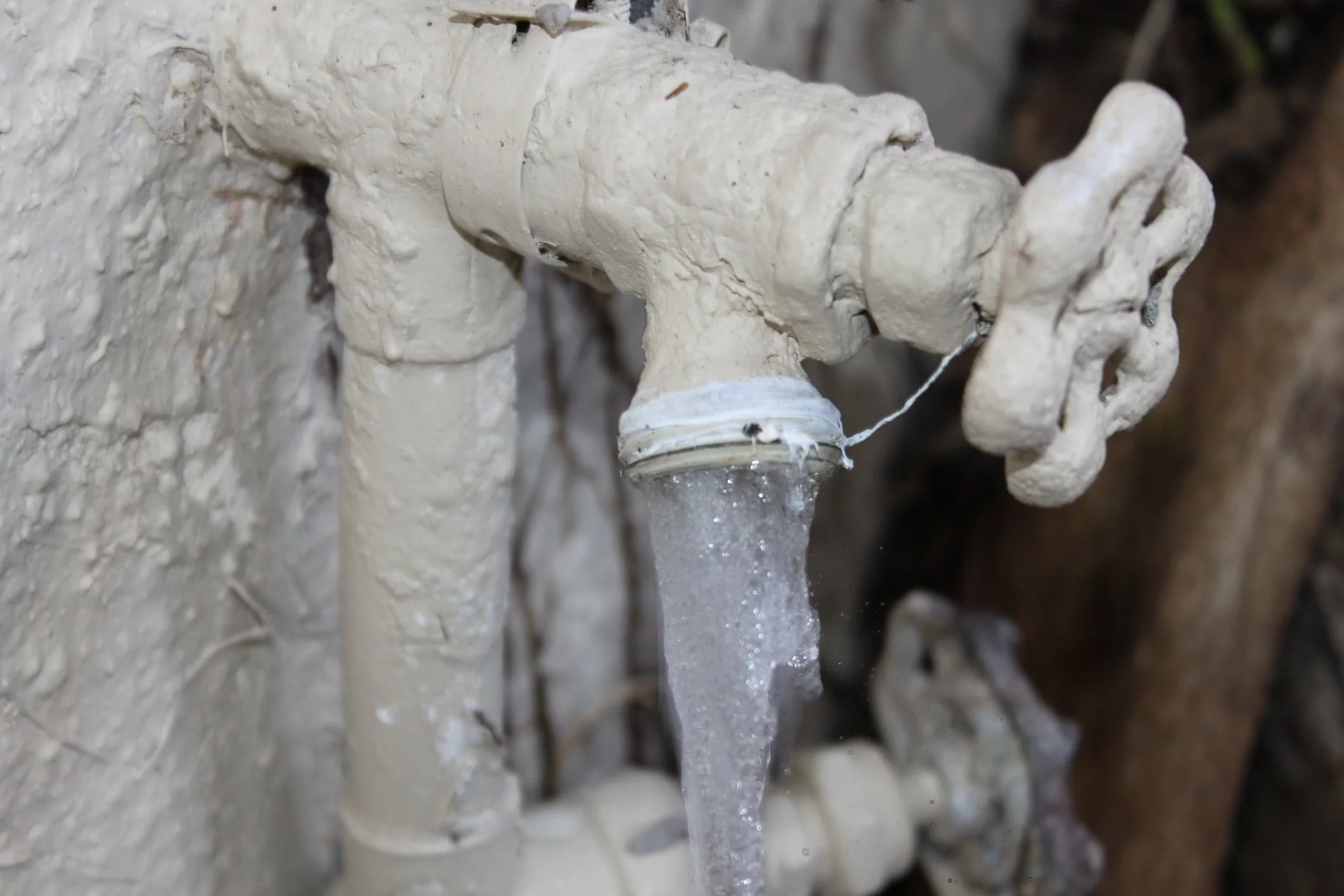
Colorado winters have a habit of swinging fast. It can be sunny and 50 degrees one afternoon and well below freezing that night. Those sudden drops are exactly when pipes are most at risk, and a single burst pipe can release hundreds of gallons of water into your walls, floors and basement before anyone notices.
The good news is that most frozen pipes are preventable. A few small habits now can save you a costly repair later.
Why pipes freeze (and why they burst)
When water freezes it expands. That expansion builds pressure inside the pipe, usually between the ice blockage and a closed faucet. The pipe doesn’t always split where the ice is. It often bursts somewhere further down the line, which is why the damage can show up in a spot you weren’t expecting.
Pipes most at risk are the ones running through unheated or poorly insulated spaces: exterior walls, garages, crawl spaces, attics and under kitchen or bathroom sinks on outside walls.
Start outside
Disconnect garden hoses from every outdoor spigot. A hose left attached traps water in the spigot and can freeze back into the pipe inside your wall, even on a frost-free sillcock. If your home has an interior shutoff valve for the outdoor spigots, close it and open the outdoor tap to let the line drain.
If you have a sprinkler system, make sure it has been properly blown out for the season.
Insulate the vulnerable spots
Foam pipe sleeves from any hardware store are inexpensive and easy to fit on exposed pipes in the garage, crawl space or basement. Seal gaps around where pipes enter the house, and keep garage doors closed if there are water lines in the garage.
Keep the heat steady
It’s tempting to turn the thermostat way down overnight or while you’re away, but keeping your home at 55 degrees or higher protects pipes inside your walls. If you’re traveling over the holidays, leave the heat on and ask a neighbor to check in.
On the coldest nights
When temperatures are forecast to drop into the single digits:
Open cabinet doors under sinks on exterior walls so warm air can reach the pipes
Let a faucet drip slowly on the coldest lines. Moving water is much harder to freeze and it relieves pressure in the pipe
Keep interior doors open so heat moves evenly through the house
Know where your main water shutoff is
This is the one step every homeowner should take today. If a pipe bursts, shutting off the main valve quickly is the single biggest thing you can do to limit the damage. It’s usually in the basement, a utility room or near the water heater. Make sure everyone in the house knows where it is and that the valve turns freely.
What to do if a pipe freezes
If you turn on a faucet and get only a trickle or nothing at all, you may have a frozen pipe.
Leave the faucet open so water can flow once it begins to thaw
Apply gentle heat with a hair dryer, space heater or warm towels
Never use an open flame or torch
If you can’t find the frozen section or can’t reach it, call a plumber
If a pipe has already burst, shut off the main water valve and call for help right away.
A furnace that works keeps your pipes safe too
Your heating system is your first line of defense against frozen pipes. A furnace that quits on a cold night puts the whole plumbing system at risk. If you’re not sure your system is ready, read Do I Really Need My Furnace Cleaned and Serviced Every Year? Our VIP Maintenance Program keeps your furnace on a regular service schedule so problems get caught before winter does.
Local help, day or night
Better Built Heating, Cooling & Plumbing serves Parker, Castle Rock, Aurora, Centennial, Highlands Ranch and the surrounding Denver Metro area. We handle both your plumbing and your furnace, so one call covers the whole picture. Estimates are free and upfront, and our team is available 24/7 for emergencies.
Call (720) 262-1976 or book online.